
Blog
EV Charger Installation Palm Coast Home Guide

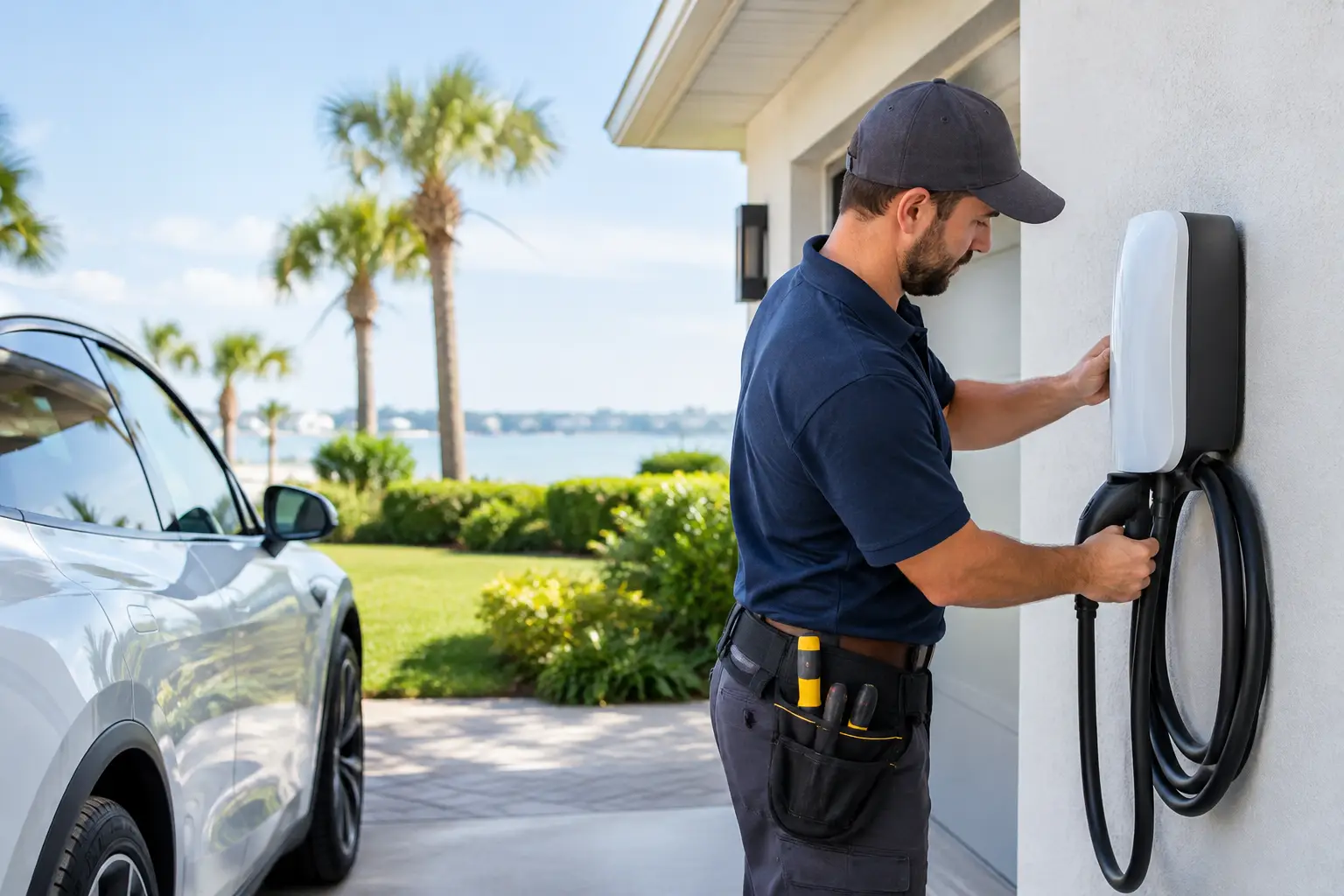
A new EV should make daily driving easier, not turn charging into a nightly concern. Professional EV charger installation Palm Coast homeowners can depend on starts with the electrical system already serving the home, then builds a charging setup that is safe, code-compliant, and practical for the way the vehicle is actually used.
A standard wall outlet may be enough for a plug-in hybrid with light daily mileage. For most fully electric vehicles, though, a dedicated Level 2 charger is the better long-term answer. It can restore meaningful range overnight, avoid overworking an existing outlet, and keep the garage, driveway, or carport organized around a permanent electrical solution.
Why a Dedicated EV Charger Is Worth Planning
Level 1 charging uses a standard 120-volt outlet. It is slow but can work when a vehicle is parked for long periods and daily driving is limited. The drawback is that a typical household receptacle was not necessarily installed for sustained, high-demand vehicle charging. A damaged, loose, or aging outlet can overheat under continuous load.
Level 2 charging uses a 240-volt circuit, similar in concept to the circuit that serves major appliances. Charging speed depends on the vehicle, the charger, and the available circuit capacity, but it generally makes overnight charging realistic for EV owners. The charger needs a correctly sized dedicated circuit, proper wire sizing, an appropriate breaker, and installation that meets current electrical requirements.
This is not a job for an extension cord, a power strip, or a quick outlet swap. An EV charger is a continuous load. That means the circuit must be designed with the vehicle charging demand in mind, not simply matched to the number printed on a charger box.
EV Charger Installation in Palm Coast Starts at the Panel
Before selecting an installation location or charger amperage, a licensed electrician should evaluate the service panel. The key question is not just whether there is an empty breaker space. It is whether the home’s electrical service has enough capacity for the charger along with air conditioning, water heating, kitchen appliances, pool equipment, and every other significant load.
Many Palm Coast homes can support an EV charger without major changes. Others may need a panel upgrade, a subpanel, load-management equipment, or a lower-amperage charging configuration. The right answer depends on the home, the vehicle, and the household’s electrical habits.
For example, a home with a newer 200-amp service and moderate electrical demand may have a straightforward path to Level 2 charging. An older home, a property with a full electric appliance load, or a home that regularly runs a pool heater and multiple air-conditioning systems may require more planning. A careful load calculation helps prevent nuisance breaker trips and avoids creating a system that operates too close to its limits.
A qualified electrician will also inspect the panel’s condition. Corrosion, damaged breakers, overcrowded wiring, outdated equipment, or previous unpermitted work should be addressed before adding a substantial new load. Charging convenience is valuable, but electrical safety comes first.
Choosing the Right Charger Location
The best charger location is usually the one that allows the charging cable to reach the vehicle port without being stretched across a walking path or driveway. In a garage, that may mean placing the charger near the front side wall, rear wall, or between vehicle bays. In a carport or driveway, the installation must be designed for outdoor use and protected from weather, impact, and moisture.
Palm Coast’s coastal climate adds another consideration. Humidity, wind-driven rain, salt air, and intense sun can shorten the life of poorly selected outdoor equipment. Exterior chargers and fittings should be rated for the environment, securely mounted, and installed with durable weatherproof components. The wiring path, conduit type, and mounting method all matter.
Think about how the household may change over the next few years. If a second EV is likely, it can be smart to plan conduit routes, panel space, or load-management options now. That does not always mean paying for two chargers immediately. It means avoiding an installation that limits future choices or requires unnecessary rework later.
Permits, Codes, and Inspection Matter
An EV charger installation involves more than mounting equipment and running wire. Local permitting and inspection requirements help verify that the circuit, disconnecting means, grounding, protection, and equipment placement meet applicable code standards.
Skipping permits can create problems when selling a home, filing an insurance claim, or troubleshooting a future electrical issue. It can also leave a homeowner with work that looks finished but was never checked for safety. A professional installation should include clear expectations about the scope of work, permit needs, and any conditions found during the electrical assessment.
Code requirements can vary based on where the charger is installed and the equipment being used. Garage, exterior, carport, and waterfront-adjacent properties may each present different challenges. The safest approach is to have a licensed electrician determine the requirements for the specific property rather than relying on a one-size-fits-all online diagram.
What Affects EV Charger Installation Cost?
No-surprise estimates begin with understanding the site. Two homes can install the same charger but have very different project costs because the electrical path is different. A charger located near the panel with open access is generally simpler than one requiring a long underground run to a detached garage.
The main factors typically include:
- The home’s available panel capacity and whether an upgrade is needed
- Charger amperage and the size of the dedicated circuit
- Distance from the panel to the installation location
- Access through walls, attic space, crawlspace, or underground areas
- Indoor versus outdoor equipment, permitting, and required repairs
The charger itself is only one part of the investment. The electrical infrastructure behind it is what protects the vehicle, the home, and the charger over years of daily use. Choosing a lower-cost installation that cuts corners on wiring methods or capacity can lead to a more expensive correction later.
Common Mistakes to Avoid
The most common mistake is assuming an available outlet is suitable for EV charging. Even when a receptacle appears to work, its wiring, terminals, breaker, and connection quality may not be designed for prolonged use at the required load. Another mistake is installing the largest charger available without checking what the home and vehicle can support.
Homeowners should also avoid placing charging equipment where cords create trip hazards, where a vehicle can easily strike it, or where outdoor equipment is exposed without proper protection. For homes with a generator, solar equipment, pool systems, or frequent storm-related outages, the charger should be considered as part of the complete electrical plan. These systems can affect load capacity and the best way to manage power during an outage.
Finally, do not overlook surge protection. Modern EV chargers contain sensitive electronics, and Florida storms can bring voltage spikes that affect more than lights and appliances. Whole-home surge protection, when appropriate for the property, can add another layer of defense for connected equipment.
What to Expect From a Professional Installation
A properly planned project begins with a site evaluation. The electrician reviews the panel, calculates available capacity, identifies the best charger location, and explains any upgrades or options that may be needed. From there, the work should be clearly scoped so the homeowner understands the equipment, installation method, expected permitting process, and price before work begins.
During installation, the electrician runs a dedicated circuit, installs the charger or receptacle according to manufacturer requirements, labels the electrical equipment, and tests the completed system. If issues are found in the panel or existing wiring, they should be explained clearly rather than hidden behind a temporary fix.
PowerPro Electrical Services brings master-electrician oversight, more than 20 years of field experience, and licensed, insured workmanship to EV charging projects throughout Palm Coast and nearby communities. The goal is a safe, practical solution that fits the property instead of a rushed installation that creates uncertainty.
Your EV charger should be one of the easiest parts of owning an electric vehicle: pull in, plug in, and know the electrical work behind it was done right. When you are ready to charge at home with confidence, schedule an evaluation with a qualified local electrician who will treat your home and investment with care.