
Blog
Hot Tub Electrical Installation Requirements

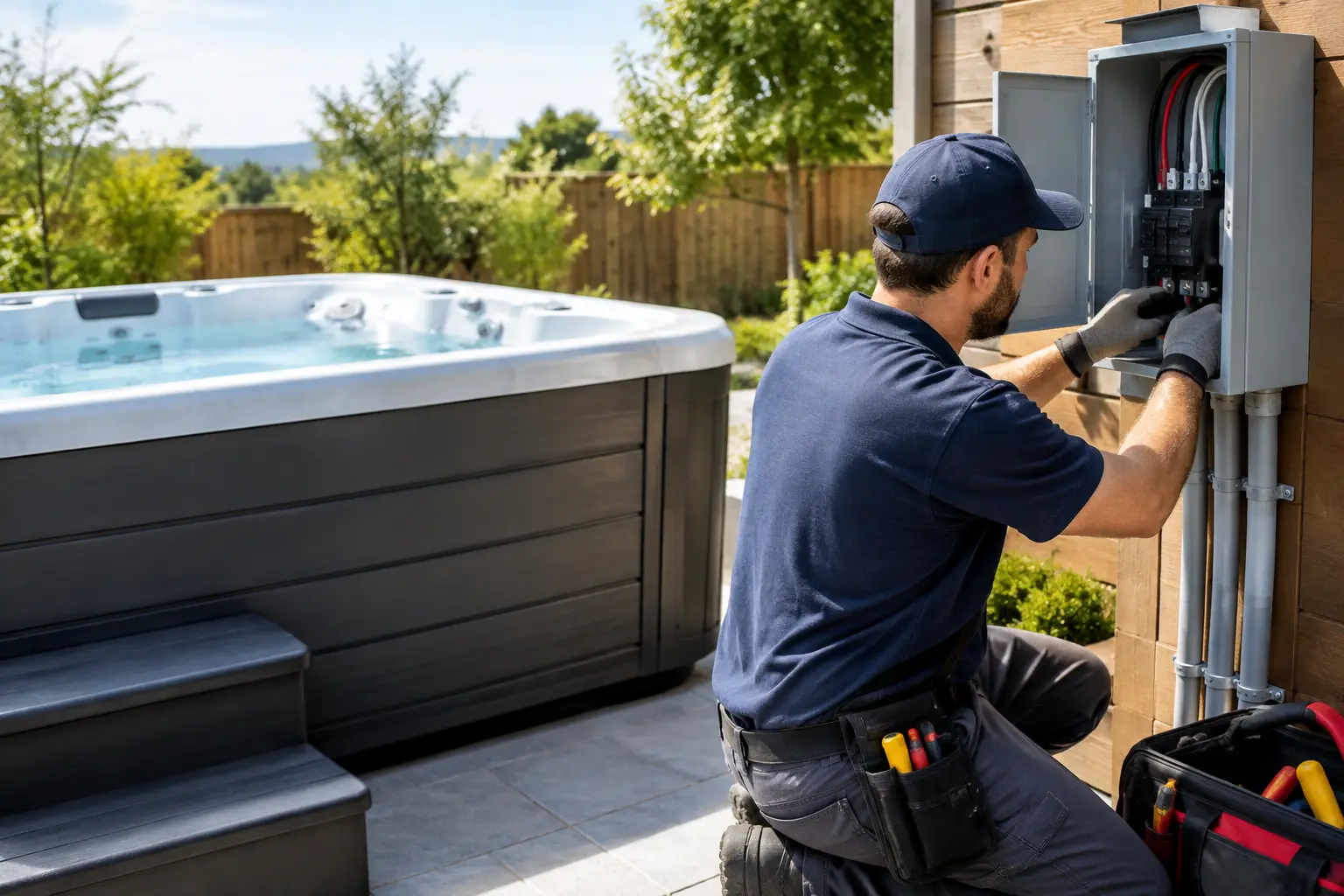
A hot tub should be relaxing from the first soak, not a source of tripped breakers, tingling water, or questions about whether the wiring was done safely. Hot tub electrical installation requirements are strict for good reason: electricity, water, bare feet, and outdoor conditions create a high-risk combination when installation shortcuts are taken.
For homeowners in Palm Coast and throughout Northeast Florida, the right installation begins well before the spa is delivered. A licensed electrician should review the hot tub’s nameplate, your electrical panel, the placement of the unit, and local permitting requirements. That planning prevents costly changes after a new patio, screen enclosure, or hot tub is already in place.
Start With the Hot Tub’s Electrical Specifications
There is no single circuit size that fits every hot tub. Many full-size spas require a dedicated 240-volt circuit, commonly rated at 50 or 60 amps. Smaller plug-in models may operate on a 120-volt, 15- or 20-amp circuit. The manufacturer’s installation manual and data plate determine the required voltage, breaker size, conductor size, and whether the unit must be hardwired.
That distinction matters. A homeowner may see a 50-amp breaker listed online and assume it is the answer, but breaker and wire sizing must match the actual equipment requirements and the installation method. Oversizing or undersizing components can create an overheating risk, nuisance tripping, equipment damage, or a failed inspection.
A permanently installed spa is normally supplied by its own dedicated branch circuit. It should not share power with outdoor lighting, receptacles, pool equipment, an air conditioner, or another large appliance. The hot tub needs predictable power, and a dedicated circuit allows protective devices to operate properly if there is a fault.
Plug-In Hot Tubs Need Care Too
A 120-volt plug-in spa may look simpler, but it is not a reason to use an extension cord or an ordinary patio outlet. The receptacle must be properly grounded, GFCI-protected, weather-resistant where required, and able to handle the load without sharing a circuit with other high-demand devices.
Extension cords, power strips, adapters, and improvised connections do not belong in a hot tub setup. Outdoor cords can be damaged by moisture, sun exposure, foot traffic, and lawn equipment. If the existing receptacle is not in the right location or does not meet the manufacturer’s instructions, the safe, practical solution is to install the correct circuit.
GFCI Protection Is a Core Hot Tub Electrical Installation Requirement
Ground-fault circuit-interrupter protection is one of the most critical safety measures around water. A GFCI monitors the current flowing out and back on a circuit. If it detects even a small imbalance that can indicate current is taking an unintended path, it shuts off power quickly.
Most hardwired hot tubs require GFCI protection at the breaker. The correct GFCI breaker must be compatible with the electrical panel and installed according to the hot tub manufacturer’s wiring diagram. Some spas are sensitive to wiring errors, and an incorrect neutral connection or improperly landed conductor can cause repeated GFCI trips.
A GFCI trip should never be defeated or ignored. It may be caused by moisture, a damaged heating element, a failing pump, incorrect wiring, or another fault that needs diagnosis. Resetting it repeatedly without finding the cause can turn a warning into a dangerous situation.
A Service Disconnect Must Be Accessible and Properly Located
Hardwired spas require a disconnecting means that allows power to be shut off for maintenance or an emergency. It must be within sight of the hot tub so a technician can verify that the equipment is de-energized while working on it.
At the same time, the disconnect cannot be placed where a person in the water could reach it. Electrical codes establish separation requirements from the inside walls of a spa or hot tub, with specific exceptions and details based on the installation. An electrician will select a location that is visible, accessible, code-compliant, and practical for your patio or pool area.
In many installations, this disconnect is a spa panel containing the required GFCI breaker. It should be rated for outdoor use when installed outside and mounted securely where it will not be exposed to unnecessary physical damage or standing water.
Panel Capacity Matters as Much as Breaker Space
An open breaker position does not automatically mean your home has capacity for a hot tub. The service panel must be evaluated to determine whether it can safely support the additional load. This is especially relevant in older Florida homes that have added air conditioning equipment, pool pumps, EV chargers, garage conversions, or upgraded kitchen appliances over time.
A licensed electrician can perform a load calculation and inspect the panel condition. The result may show that your panel has adequate capacity, or it may reveal that a panel upgrade, subpanel, or other improvement should be completed before the hot tub circuit is installed.
This is not an area to guess. A hot tub can draw substantial power for hours while heating and filtering. Adding it to an already strained electrical system can lead to overheated connections, frequent breaker trips, voltage issues, and a shorter service life for electrical equipment.
Outdoor Wiring Must Be Built for Florida Conditions
Florida heat, humidity, wind-driven rain, salt air, and landscaping activity are hard on outdoor electrical systems. Wiring methods, conduit, fittings, boxes, covers, and supports need to be listed for their location and installed to resist corrosion and moisture intrusion.
If the circuit runs underground, burial depth and conduit requirements depend on the wiring method, location, and protection provided. Underground electrical work is not simply a matter of digging a shallow trench and pulling cable through pipe. Wet-location-rated conductors, proper transitions, secure conduit, and protection from physical damage all matter.
For coastal and waterfront properties, corrosion resistance deserves extra attention. Enclosures, hardware, and connections exposed to salt air can degrade faster than expected. Routine inspection is a smart investment, particularly when a hot tub sits near a pool, dock, seawall, or open coastal exposure.
Bonding and Grounding Are Not the Same Thing
Grounding provides a path intended to help protective devices clear certain faults. Bonding connects conductive parts together to reduce voltage differences that could otherwise create a shock hazard. Both are essential, but they serve different purposes.
Hot tub bonding requirements depend on the type of spa, its listed equipment, nearby metal components, and the details of the installation. Metal railings, fencing, equipment, structural steel, and other conductive objects near the water may need to be evaluated. This is one reason a hot tub should not be treated as a simple appliance installation.
A qualified electrician follows the applicable electrical code, manufacturer instructions, and local inspection requirements rather than relying on a one-size-fits-all diagram. The right approach may vary between a portable spa on a paver pad, an in-ground spa beside a pool, and a built-in spa under a screened enclosure.
Permits and Inspections Protect the Investment
Electrical permits and inspections may be required for hot tub wiring in your jurisdiction. While paperwork can feel like an added step, it confirms that the installation has been reviewed for circuit protection, disconnect location, wiring methods, grounding, bonding, and other safety details.
Permitted work also helps protect the value of your property. If you sell, renovate, make an insurance claim, or need future electrical service, properly documented work is far easier to verify than an undocumented installation. A no-surprise estimate should explain the scope of electrical work, likely permit needs, and any panel upgrades identified before the project begins.
When to Schedule the Electrical Work
The best time to involve an electrician is before the hot tub is delivered and before the final location is set. Share the manufacturer’s specifications, the intended site, and any plans for a gazebo, deck, patio extension, or screen room. That allows the circuit route and disconnect placement to be planned without cutting through finished surfaces later.
If you already have a hot tub and notice warm breakers, flickering lights when the heater starts, a GFCI that will not reset, corrosion in the disconnect, or any sensation of electrical tingling, stop using the spa and have the system inspected. Water-related electrical concerns deserve prompt attention.
PowerPro Electrical Services provides licensed, code-compliant hot tub wiring with master-electrician oversight for Palm Coast-area homeowners. The goal is straightforward: give your spa the dedicated, protected power it needs so your backyard upgrade remains a place to unwind with confidence.