
Blog
Boat Lift Electrical Wiring Florida Done Right

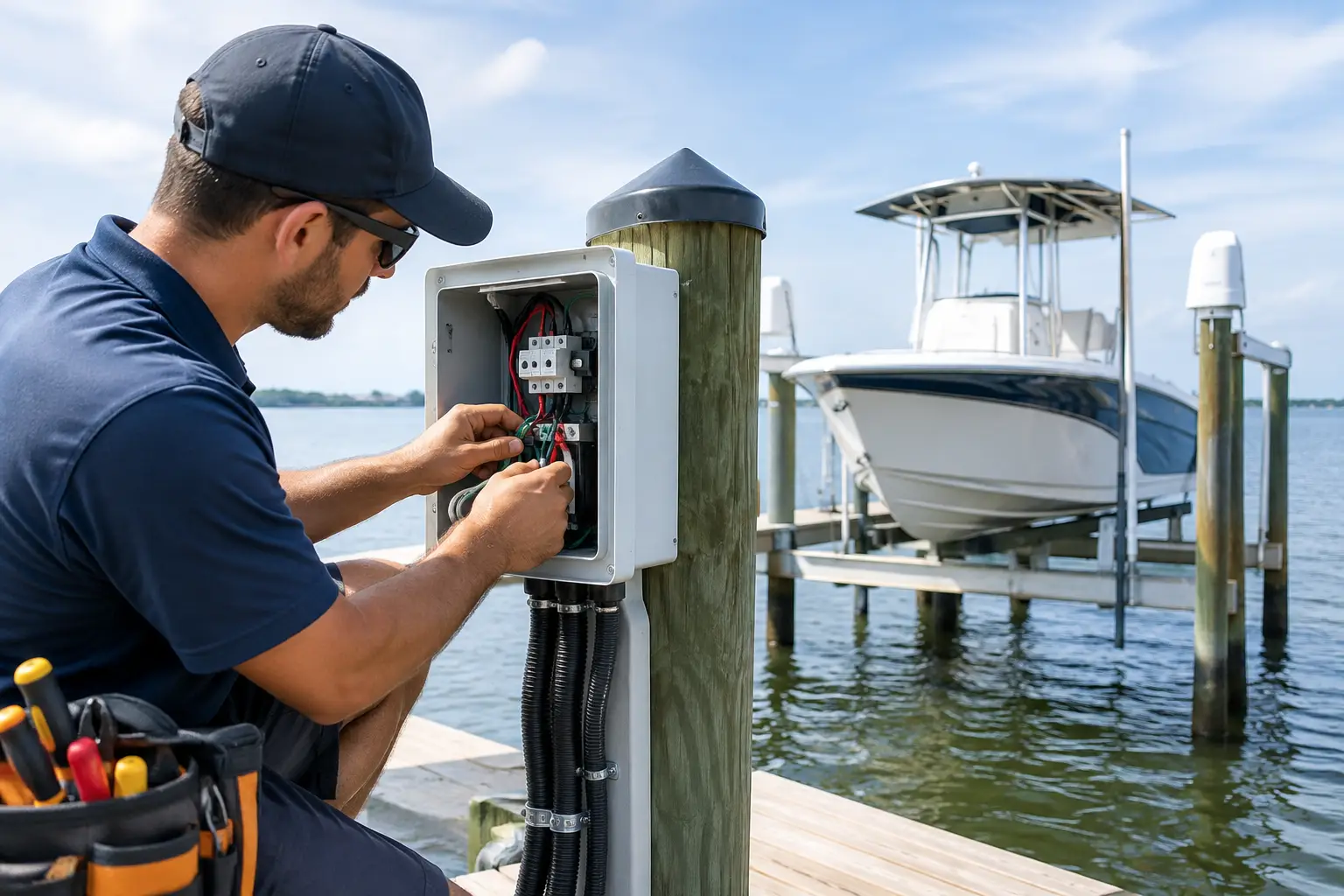
A boat lift should make time on the water easier, not introduce an electrical hazard at the dock. Boat lift electrical wiring Florida property owners rely on must account for water, salt air, storms, changing water levels, and the high demand of a lift motor. A cord, outlet, breaker, or disconnect that seems fine on dry land can become a serious problem when it is mounted over or near water.
For waterfront homes and marinas in Palm Coast, Flagler Beach, St. Augustine, and nearby coastal communities, safe wiring starts with a complete look at the lift, the dock, and the electrical system feeding it. The goal is not simply to get the lift moving. It is to provide dependable power while protecting people, boats, and property.
Why Florida Boat Lift Wiring Needs Special Attention
Florida waterfront electrical systems work in a tough environment. Humidity works its way into boxes and fittings. Salt air speeds up corrosion. Afternoon storms can bring lightning, wind-driven rain, and power surges with little warning. Over time, these conditions can damage insulation, corrode connections, and weaken components that appeared sound during installation.
A boat lift also puts electrical equipment close to water, where small wiring mistakes carry greater consequences. Damaged cords, loose connections, missing covers, improper grounding, and undersized conductors can lead to nuisance tripping, motor failure, shocks, or fire. If anyone feels tingling in the water or on a dock ladder, treat it as an emergency. Keep people out of the water and have the system inspected immediately.
Many older docks have been modified over the years. A previous owner may have added lighting, outlets, shore power, or a larger lift without confirming whether the existing feeder, panel capacity, and protective devices could support the added load. That is why a professional evaluation matters before connecting a new lift or replacing a motor.
What Safe Boat Lift Electrical Wiring in Florida Includes
The right design depends on the lift manufacturer, motor voltage, distance from the electrical panel, dock layout, and local permitting requirements. A small personal-watercraft lift and a multi-motor boat lift do not have the same electrical needs. Still, a properly planned installation generally includes a dedicated circuit sized for the equipment and installed with wiring methods rated for the location.
The circuit should have correctly matched overcurrent protection at the panel. The wiring must be sized for both the equipment load and the run length. Long runs can create voltage drop, which may cause a motor to struggle, run hot, or fail prematurely. Installing a larger breaker to stop trips is never the safe answer. The cause of the trip needs to be diagnosed.
Ground-fault protection is another critical safeguard around docks and water. The exact protection required can depend on the equipment, configuration, adopted electrical code, and local authority having jurisdiction. A licensed electrician can determine what applies to your property and install the right protective devices without creating a setup that trips constantly or leaves people exposed.
Weatherproof boxes, covers, fittings, and enclosures are equally important. Outdoor-rated equipment must be installed so rain and spray do not enter the system. Connections need to remain accessible for service, yet protected from accidental contact, impact, and corrosion. On a dock, placement matters as much as the product itself.
The Lift Motor Is Only Part of the System
A lift that will not run is not always a motor problem. The fault may be in the breaker, disconnect, controls, receptacle, supply wiring, or a corroded connection. In some cases, a failing capacitor or limit switch inside the lift equipment is responsible. Guessing can waste money and may make the problem worse.
Professional troubleshooting starts at the source and follows the circuit safely to the equipment. An electrician can check voltage, connections, grounding, protective devices, and signs of heat damage or moisture intrusion. This disciplined process identifies whether the issue is electrical supply, lift equipment, or both.
A disconnecting means near the lift can also make maintenance safer and more practical. It allows the equipment to be shut off before service work is performed. The exact placement and type should be selected based on code requirements, equipment instructions, and site conditions.
Common Warning Signs at Your Dock
Do not wait for a complete outage before scheduling service. Electrical issues around a boat lift often provide early warnings, especially after heavy rain, a tropical system, or a period of high use.
Watch for a breaker that trips when the lift starts or changes direction, a motor that hums but does not move, lights that dim when the lift operates, rusted electrical boxes, cracked conduit, damaged cord jackets, or outlets that no longer hold plugs securely. A burning smell, warm receptacle, buzzing panel, or visible arcing requires prompt attention. Turn off power to the affected equipment if it can be done safely and call a qualified electrician.
Corrosion deserves special attention on Florida docks. Green or white buildup on terminals, rusted screws, brittle insulation, and loose covers are not cosmetic problems. They can interrupt current flow, create resistance and heat, or allow moisture into energized components.
Planning a New Lift or Dock Upgrade
The best time to address boat lift power is before the dock is finished or the lift arrives. Early planning gives the electrician room to route wiring correctly, coordinate with the dock builder, choose the right equipment location, and avoid expensive rework later.
Start with the lift manufacturer’s electrical specifications, including voltage, amperage, motor quantity, and any control requirements. Then evaluate the home’s electrical panel. A panel may have physical breaker space but still lack the load capacity for a new lift, pool equipment, EV charger, or other major addition. A load calculation and panel inspection provide clearer answers than assumptions.
Surge protection is also worth discussing for waterfront equipment. Florida storms and utility disturbances can damage sensitive controls, chargers, and motors. Whole-home surge protection can support broader protection at the main electrical system, while equipment-specific solutions may be appropriate in certain layouts. The right approach depends on how the dock is fed and what equipment is connected.
Permits and inspections can feel like an extra step, but they protect the property owner. Code-compliant work documents that the system was installed to current safety standards and helps uncover issues before they become costly failures. For commercial docks, rental properties, and communities with shared waterfront infrastructure, proper documentation can be especially valuable.
Why DIY Dock Wiring Is a Risk
Replacing a weatherproof cover or resetting a breaker may be within normal property maintenance. Installing or modifying boat lift wiring is different. The work may involve panel connections, underground or exterior wiring methods, GFCI protection, grounding and bonding considerations, wet-location equipment, and local code requirements.
Online advice often overlooks site-specific details. Two docks may look similar but have different service voltages, feeder sizes, lift loads, water exposure, or local inspection requirements. An incorrect neutral or grounding connection, improper splice, or unprotected cable can leave a hidden hazard in place until the next storm or busy weekend on the water.
A licensed local electrician brings the right diagnostic tools, code knowledge, and accountability to the job. PowerPro Electrical Services provides master-electrician oversight, clear estimates, and practical waterfront electrical solutions for Northeast Florida property owners. Whether the job involves a new lift circuit, corroded dock wiring, a tripping breaker, or storm-related damage, the focus should remain on safe, durable work that holds up in the coastal environment.
Your boat lift is there to protect a valuable investment. Give its electrical system the same level of care before a small dock issue becomes the reason your next day on the water is cut short.