
Blog
Pool Electrical Bonding Repair for Safer Swims

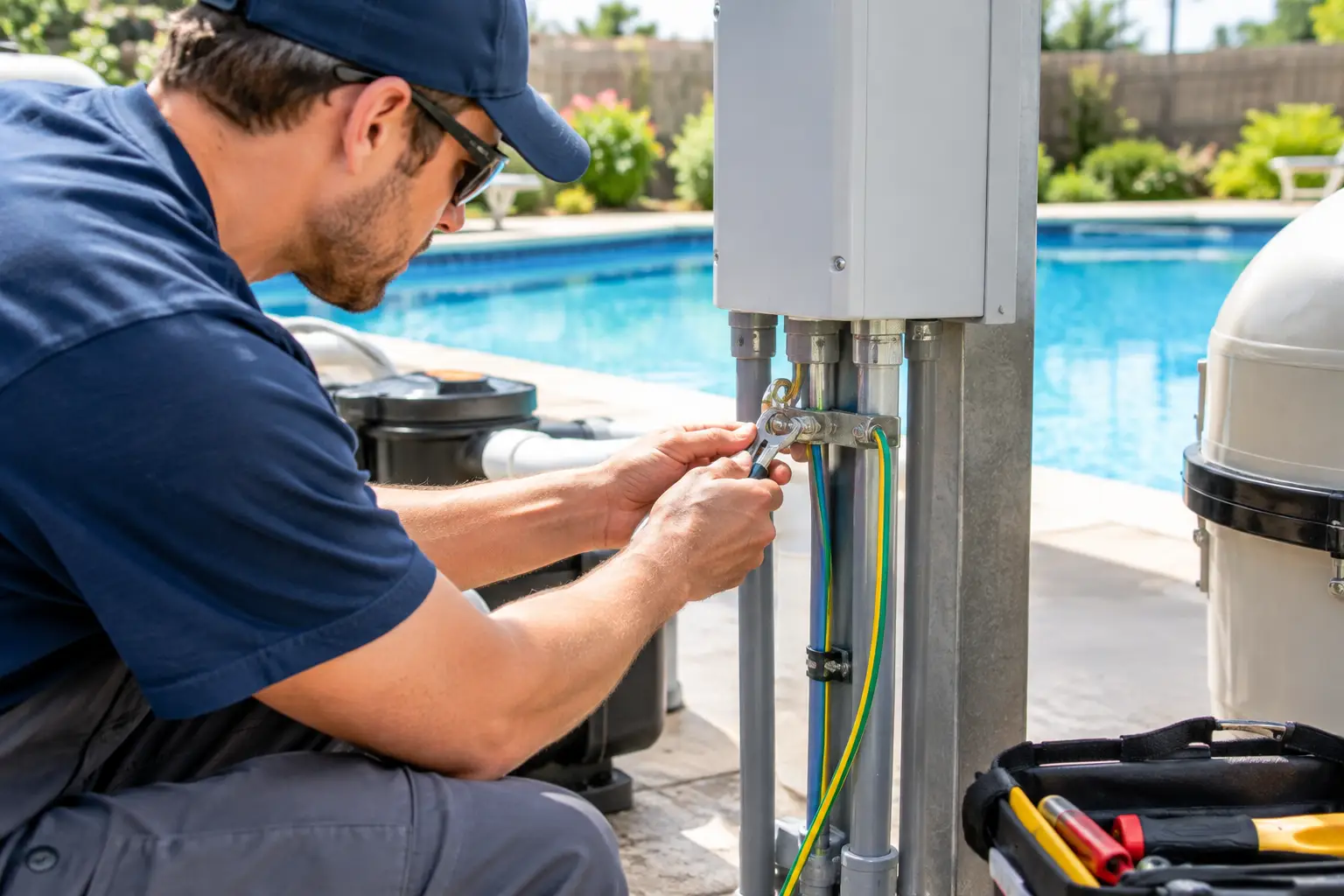
A pool can look perfectly maintained and still have a hidden electrical safety problem below the deck. Pool electrical bonding repair addresses the metal components around your pool that must be kept at the same electrical potential. When that bond is damaged, corroded, missing, or improperly altered during a renovation, the risk is not cosmetic. It can create conditions for stray voltage around water, rails, lights, pumps, and swimmers.
For Palm Coast and Northeast Florida pool owners, this work deserves prompt attention. Salt air, high humidity, frequent rain, aging equipment, and years of pool updates can all take a toll on the bonding system. A licensed electrician can identify what is actually wrong, explain the repair clearly, and restore a safe, code-compliant installation without guessing.
What Pool Bonding Does and Why It Matters
Bonding and grounding are related, but they do different jobs. Grounding provides a path intended to carry fault current safely back to the electrical system so a breaker or protective device can operate. Bonding connects conductive parts of the pool area together so they remain at the same electrical potential.
That distinction matters around water. A pool bonding grid may connect the reinforcing steel in the pool shell, metal fittings, ladder cups, handrails, pump equipment, heater components, metallic conduit, and other conductive parts required by the installation. If one piece of equipment becomes energized or carries a different voltage potential than another, a person touching both can become the path between them.
A proper bonding system reduces voltage differences in the pool environment. It is one layer of a larger safety system that can also include correctly installed GFCI protection, proper equipment grounding, listed pool equipment, approved wiring methods, and a sound electrical panel. No single component replaces the others.
Warning Signs That Call for Pool Electrical Bonding Repair
Some bonding failures are discovered during an inspection, equipment replacement, or a permit-related upgrade. Others show up as visible damage or unusual electrical behavior. Do not wait for a shock event to take the concern seriously.
Watch for green or white corrosion at bonding clamps, rusted handrails, loose copper conductors, damaged conduit, or a bond wire that has been cut during landscaping, deck work, or equipment replacement. Exposed copper near the pool pad may look minor, but a compromised connection can defeat the entire purpose of the system.
Electrical symptoms also deserve immediate attention. These include a tingling sensation when touching a rail or water, lights that flicker, GFCI outlets that trip repeatedly, a breaker that will not stay on, or pump and heater equipment that behaves unpredictably. A swimmer reporting a tingle is an urgent safety issue. Turn off pool equipment if it is safe to do so, keep everyone out of the pool and surrounding wet area, and call a qualified electrician.
Older pools are especially worth evaluating. Many properties have had pumps, heaters, salt systems, lights, automation controls, deck finishes, or rails replaced over the years. Each change can affect the existing bonding path. A new component may be installed correctly on its own but still expose a weakness in the original system.
Why Florida Pools Need a Careful Inspection
Florida’s coastal conditions are hard on electrical connections. Salt-laden air can accelerate corrosion, while wet soil and regular storms affect outdoor equipment and underground wiring. In waterfront and coastal communities, electrical work has to account for more than what is visible at the pool pad.
Pool bonding repair also becomes more complicated when connections are concealed in concrete, under pavers, or within a finished pool structure. The right solution depends on the pool’s construction, age, equipment, and the specific reason the bond failed. A cracked or corroded clamp may be straightforward. Missing bonding to structural steel or a concealed grid may require more extensive investigation and coordination with a pool contractor.
That is why a quick visual check is not enough. An electrician should verify continuity where accessible, inspect the equipment grounding system, confirm GFCI protection, examine conductors and terminations, and look for signs that previous repairs were improvised. The goal is to identify the full safety issue, not merely reconnect one visible wire.
How a Professional Pool Electrical Bonding Repair Is Performed
A safe repair starts with diagnosis. The electrician reviews the pool equipment, electrical panel, disconnects, receptacles, lighting circuits, rails, and accessible bonding points. Testing helps determine whether the issue is a broken bond, corroded connection, missing component, grounding defect, GFCI problem, or a combination of concerns.
Once the issue is clear, the repair should use materials and methods appropriate for pool environments. This may involve replacing corroded bonding clamps, installing correctly sized bonding conductors, reconnecting equipment that was left out during an upgrade, repairing damaged conduit, or correcting improperly terminated wiring. All connections must be secure, accessible where required, and suitable for wet, outdoor conditions.
After repairs are complete, the electrician tests the system again and verifies that protective devices function as intended. Depending on the scope of work and local requirements, permits or inspections may be needed. That process is not red tape. It provides a second layer of accountability for a safety-sensitive installation.
A clear estimate should explain what is being repaired, what testing is included, and whether related corrections are recommended. If an older pool has several deficiencies, a good contractor will separate immediate hazards from sensible future upgrades. That gives you the information to make a practical decision without surprises.
Do Not Treat Bonding as a DIY Pool Project
Replacing a loose-looking clamp may seem like a simple weekend fix. The trouble is that the visible clamp may not be the real failure, and an incorrect repair can create a false sense of safety. Pool electrical systems combine water, buried conductors, concrete-encased steel, low-voltage lighting, line-voltage equipment, and code requirements that change based on the installation.
Avoid using household wire, makeshift connectors, tape-covered splices, or unapproved clamps around pool equipment. Do not assume a wire is harmless because it is bare copper. Bonding conductors are intentionally bare in many applications, but their routing, connections, and continuity must be correct.
A pool service company can often identify equipment concerns, but electrical diagnosis and repair should be handled by a licensed electrician with pool wiring experience. If there is a possible shock hazard, this is not the place to compare shortcuts.
Protect the Repair With Routine Checks
Once the bonding system is corrected, periodic attention helps prevent repeat issues. Check the equipment area for corrosion, physical damage, and loose or altered connections after major storms, deck work, equipment changes, or landscaping projects. Keep the pool pad reasonably clear so problems are not hidden behind stored items or overgrown vegetation.
When replacing a pump, heater, saltwater chlorinator, light, rail, or automation equipment, ask how the work affects bonding and GFCI protection. A replacement project is a smart time to inspect the larger electrical system, particularly if the pool is more than a decade old or has had multiple owners.
PowerPro Electrical Services provides careful troubleshooting and pool electrical repairs for homeowners and property owners across Palm Coast and nearby Northeast Florida communities. With master-electrician oversight and more than 20 years of field experience, the focus is always on a safe, practical solution and workmanship built for Florida conditions.
Your pool should be a place where family and guests can relax without questioning the equipment around them. If you see corrosion, damaged bonding conductors, recurring electrical trips, or anything that does not feel right, keep people out of the water and arrange a professional evaluation before the next swim.